How isolation and fear transformed the desert into a kingdom of legends and jinn

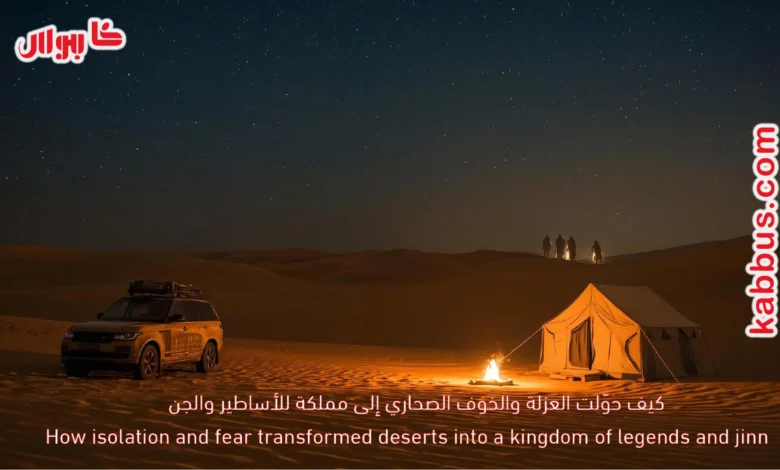
Jinn, those mysterious creatures mentioned in religious texts, are surrounded by an aura of myths and folk tales. The image of jinn in the minds of many is that of hidden creatures that live in darkness and appear from time to time to instil fear or curiosity. With countless stories about them in empty and dark places, many fall prey to the fear and curiosity that these creatures arouse. This raises profound questions about why people associate jinn with deserts and ruins. What is the secret behind the spread of these stories? Let us explore religious, psychological and cultural explanations for this association through the following points, to ultimately discover the truth about these mysterious creatures.Translated with DeepL.com (free version)
Jinn from a religious perspective
Religious texts describe jinn as beings created from fire, differing in nature from humans. God Almighty created them before humans, giving them unique abilities to move and conceal themselves, which explains why they are believed to prefer isolated places. In Islam, jinn are considered free beings, some of whom are angels who follow God, while others deviate and become devils.
In many prophetic hadiths, warnings were given against entering certain places such as graveyards and ruins without mentioning Allah's name and praising Him, because these places are considered to be the abodes of jinn. When we talk about quiet and remote places, we find that they provide a suitable environment for jinn, where they can move freely without being disturbed by humans.
Depictions of jinn in ancient books and manuscripts
There are many ancient books and manuscripts that discuss the forms of jinn. Some of them depict jinn as beings with various forms, sometimes appearing in human form, and sometimes in the form of animals or strange creatures. Some ancient myths from civilisations such as the Persians and Greeks document different forms of jinn, such as ‘goblins’ and ‘ghouls.’ While jinn are depicted in some stories as terrifying creatures, others highlight a lighter side to their character, as beings prone to mischief and mayhem.
Islamic manuscripts also contain descriptions of jinn, referring to specific types of jinn such as ‘mard’ and ‘jinn’, each type characterised by its unique characteristics and small or large body size.
Why do jinn prefer quiet and remote places?
The jinn's preference for quiet places is linked to their isolation from human noise, which enables them to meditate and move freely. Likewise, some believe that abandoned places represent a gateway to interact with other beings. There is a widespread belief that small gazelles, rubbish dumps and graveyards are ways of attracting jinn, as they are associated with certain rituals and spiritual practices.
Garbage dumps, for example, are considered places of impurity and can therefore be a magnet for jinn seeking places that enhance their power in intangible ways. There are some prophetic hadiths that warn against entering such places without mentioning God, which reinforces the cultural and intellectual identity surrounding the idea of jinn.
The psychological and mental aspect
Isolation stimulates feelings of fear and anxiety in the human psyche. When a person is alone in a dark place, the human mind usually disregards logic and begins to search for explanations for what is happening around them. If isolation is associated with an environment such as the desert, where strange sounds and shadows abound, the heart rate accelerates and the person begins to sense an intangible danger, giving way to suggestions and perceptions.
The effect of isolation on the mind
Psychological studies indicate that isolation leads to different reactions in the brain. It is reported that individuals suffering from severe loneliness often begin to see things or hear voices that do not exist. The hypothesis here is that when under stress and psychological pressure, the mind tends to fabricate a new reality that matches feelings of anxiety and fear.
Darkness plays a pivotal role in amplifying the sense of danger, as things that may be ordinary at night turn into terrifying worlds. When an individual is exposed to harsh experiences such as fatigue or hunger, these conditions can lead to hallucinations or delusions, which increase the credibility of stories about jinn. This psychological state makes a person believe that they are seeing or hearing something, causing them to encounter the unknown with great fear and anxiety.
Folk culture and myths
Many stories about jinn originate from oral narratives passed down through generations. Throughout history, deserts have been ideal places for myths to flourish, as these mysterious places can become fertile ground for stories about jinn. Bedouins, for example, used to recount stories of adventures and strange occurrences that happened to them in these remote places, making these tales part of their culture.
The role of oral narratives
Oral narratives played a significant role in conveying the culture of jinn among communities. Summer gatherings or late nights in the desert are considered traditional venues for storytelling, where people gather and share their experiences with jinn and the strange situations they have encountered. Some of these stories satisfy people's curiosity and spark their imagination, while others are used to teach moral lessons.
Some folk tales about jinn are repeated, such as those that tell of strange sightings or unfamiliar sounds heard at night. Over time, these stories become part of the cultural identity of tribes and individuals, reinforced by experiences of night-time travel and other adventures. Myths about jinn at night reinforce the idea that they exist in those environments, taking advantage of the darkness of the desert to create an atmosphere of awe.
Famous examples
One famous example that has dominated people's minds is the story of jinn in ruined houses, where it is said that goblins appear at night and threaten the inhabitants. There are numerous accounts of people who claim to have lost valuable items due to jinn, while others report seeing ghosts or shadows moving in the dark. These stories are considered major events that have been etched into the memory of communities.
Reasons for the spread of stories and incidents in abandoned places
Several factors contribute to the spread of stories about jinn in abandoned places. The lack of witnesses in these places means that there is more room for imagination and speculation, adding a touch of mystery to what happens in that area. The effect of wind and sounds travelling through the air also creates shadows and echoes that can be interpreted as signs of the presence of jinn.
The impact of the surrounding environment
In the desert environment, where winds are active and create unfamiliar sounds, the human mind can associate these sounds with the presence of jinn. Intermittent and sudden sounds heighten tension, leading a person to believe that they may be surrounded by mysterious beings.
Fatigue, hunger, and thirst, especially in an environment such as the desert, can lead to hallucinations. Exhausted bodies need food and water, and in their absence, the mind begins to create illogical explanations for events. Thus, mysterious stories become more exciting and appealing than ordinary everyday stories, contributing to their spread among people.
Exciting stories.
When someone tells a mysterious story, it effectively captures people's attention. Stories about jinn often contain elements of excitement and suspense, making them a favourite choice for many people in the field of storytelling. As a result, these stories spread and are passed around among people, with each new addition to the story making it more appealing.
Distinguishing between fact and fiction.
You will find that there are real cases that can baffle the mind, where some people claim to have felt genuine spiritual effects. However, not every story told is true, and many religions and faiths warn against falling under the influence of superstitions. The importance of balance between religion and reason makes it clear that one should not give in to fear or exaggeration
The need for critical thinking.
One must have the ability to think critically and distinguish between reality and fantasy, as passing information from one person to another adds many layers to the story, and details often change. It is important to remember that the basic requirement for understanding phenomena is to use both reason and religion
Exaggeration can create unjustified panic and cause some people to avoid places that are considered undesirable. It is important to talk about science and seek reliable explanations before believing any passing rumour
In conclusion, we can say that jinn exist according to religions, but the abundance of stories about them in abandoned places is due to a combination of religion, culture and human fear. These stories arouse human curiosity, but it is important to approach them with understanding and rationality, so that we can distinguish between reality and fantasy
Ultimately, myths about jinn embody humanity's desire to understand the mysterious forces that surround us, but we must strive to understand our existence and our relationship with the world around us in a balanced and rational manner. In conclusion, let us encourage each other to treat these stories with a degree of appreciation, without losing sight of the truth that lies behind them
 English
  Arabic