The Wolf Through the Ages: From the Shadows of Myth to the Pulse of the Earth

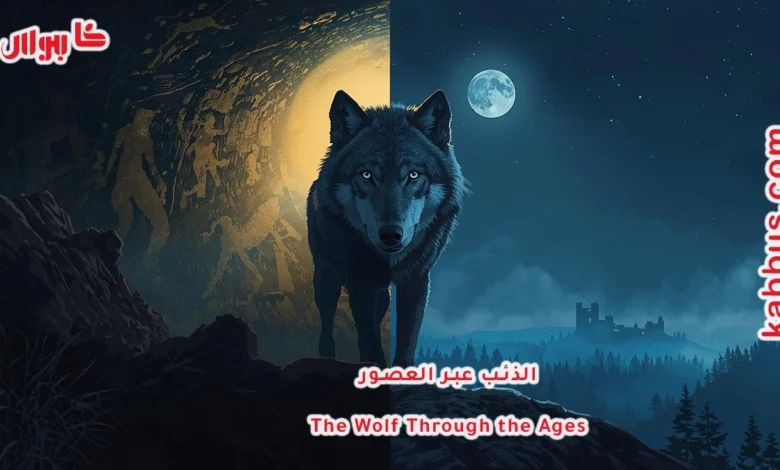
Ever since the first humans drew their images on cave walls tens of thousands of years ago, wolves have appeared alongside them—not only as prey, but as companions and rivals, as another voice in the forest reminding them that they are not the sole masters of nature. For primitive man, the wolf was an existential mirror in which he saw both his desires and his fears: eyes glowing in the night, silent solitude, and a loyalty that made the pack closer to a family. Over the centuries, this animal became a refuge for legend, as if all of humanity needed the image of the wolf to explain to itself the meaning of fear, power, and freedom.
Thinking about the wolf is not just about an animal of flesh and blood, but about a symbol that has transformed over the ages. In human consciousness, the wolf is the boundary of primal instinct, the mysterious guardian of the door between two worlds — the human world that shapes order and law, and the natural world that knows only the necessity of survival. This duality has made the wolf part of almost every belief and story, from the ancient East to the far north of Scandinavia, from the desert to the snow, from myth to science.
Perhaps when we talk about "the wolf through the ages," we are talking about the history of our view of life itself: how the meaning of power has changed, and how humans' view of themselves has shifted from being part of the world to being its rulers. The wolf, in essence, has not changed much since it howled under the same moon we see today; but we have changed, and our interpretations of it have multiplied as we have distanced ourselves from the sounds of the night. We need to listen to it again, not as an adversary but as a witness to our relationship with what we call "nature," that strange familiar place from which we came and to which we will never return.
The wolf in beliefs and legends
Since ancient mythology, the wolf has occupied an ambiguous place between evil and protection, between power and destruction. In the ancient East, specifically in Mesopotamia, creatures associated with wolves were seen as nocturnal spirits—called "Lilith" or "Lilith"—linked to the world of death and wind. Strangely, however, these spirits were not demonic in the later sense, but rather embodied untamed forces of nature, forces that could not be controlled but could be negotiated through rituals and symbols.
In ancient Egypt, the god Anubis The wolf's head or jackal is his symbol. Anubis was the guardian of tombs and the shepherd of souls on their journey to the afterlife, making the wolf's features a bridge between life and death. The connection here is not with terror but with guardianship; just as the wolf guards its pack or its territory, Anubis guards souls from perdition. Thus, the wolf rose to the rank of a sacred creature, as if it were a bridge to safety in the face of the unknown.
In Greek and Roman mythology, the wolf appears in contrasting images. It is said that Apollo, the god of light, adopted the wolf as his sacred animal. In contrast, in other tales, the wolf embodied shadows as a symbol of dark instincts. However, the most significant transformation came in the myth of the she-wolf who suckled the twins Romulus and Remus, the founders of Rome. This she-wolf was not just an animal that happened upon two children, but a symbolic surrogate mother who gave the nascent civilisation its first strength. Thus, the she-wolf became the mother of cities, not a beast of the forest.
In Norse mythology, we encounter a giant wolf named Fenrir, son of the god Loki, who was chained up for fear that he would destroy the world on Judgment Day. When the chains break at the end of time, Fenrir swallows the sun, bringing about Ragnarok: the end of the world and its rebirth. This myth does not see the wolf as an absolute enemy, but rather as part of the cycle of destruction and creation, for there can be no renewal without destruction, and no order without the chaos that precedes it.
In the stories of the indigenous peoples of the Americas, the wolf appears in a completely different light. It is considered a teacher of wisdom and a spiritual guide. Some consider it a spiritual grandfather who teaches humans cooperation and loyalty; others see it as a messenger from the spirits of the forest, teaching the balance between solitude and belonging. In these narratives, there is no harm in the wolf being man's teacher in the art of survival, for it knows that survival is not achieved by force alone, but by harmony.
The wolf as a cultural symbol
The wolf has never been just an animal to be hunted or attacked; it has always been a symbol of something greater: the fear that gives us boundaries. The wolf has always lived on the edge of villages and pastures, close enough to remind humans of the wilderness, yet far enough away to maintain its mystery. In this liminal space, it became both a symbol of awe and audacity. In both the East and the West, the wolf represented the dividing line between order and chaos, between humans and the nature from which they emerged and to which they fear to return.
In ancient Arab imagination, the wolf was a symbol of patience and dignity, the poet's only friend on long nights. Someone once said: “On a night like the waves of the sea, I was overcome with all kinds of worries, so I said to him as he stretched out his body and followed with miracles and lamentations, O long-haired wolf, is peace with you or your hoped-for echo? The wolf here is a creature burdened with loneliness, close to the human being who suffers from alienation. Thus, a relationship of identification rather than hostility was born.
In medieval European civilisation, the wolf became a demonic enemy. With the rise of Christian theology, it came to be used as a symbol of spiritual danger: the "wolf in sheep's clothing" became a metaphor for cunning hidden beneath a mask of innocence. This transformation was not accidental, but rather the result of humanity's need to demonise nature in order to justify its domination over it. Thus, the transformation was complete: from a mythical mother nursing twins to a demon that preys on humans.
On the other hand, in Eastern philosophies, especially Japanese ones, we find the wolf revered in mountain monasteries as the guardian of fields from evil spirits. Farmers pray to it and implore its spirits to protect them from the wandering dead. Here, fear turns to respect, as the guardian and the predator are two sides of the same coin.
Thus, across cultures, the wolf has remained a symbol of endless duality: safety and danger, loyalty and betrayal, civilisation and wilderness. It is not so much an animal as a mirror of humanity itself. Whenever we look into it, we see the instincts we try to forget and the greatness we fear to face.
The wolf in popular culture and proverbs
In collective memory, the wolf has remained present in proverbs and stories as a popular symbol of both experience and danger. Arabic proverbs are full of references to it, sometimes warning of its cunning, sometimes praising its courage. It is said: "Beware of the wolf's silence more than its voice," and "A wolf does not eat the flesh of a wolf." Proverbs do not describe the animal but encode the experience of a human being living in a harsh environment who has learned that intelligence equals strength.
In Europe, folk tales cemented this dark image. From Little Red Riding Hood to The Seven Little Sheep, the wolf was synonymous with death and deceit, embodying society's patriarchal fears of the forest, the body, and uncontrolled birth. The aura surrounding the wolf was not so much about the wolf itself as it was about humans themselves: about the woman who must be subjugated, and the child who is told not to walk through the forest.
Despite this image, humans have not been able to completely erase its mystique. In pastoral poems and mountain journeys, the wolf remains a symbol of chivalry and independence. In North America, where the roots of indigenous peoples remain vibrant, the wolf has endured as a spiritual compass, reminding humans that strength lies in community, not domination. It is curious that the modern image in popular culture—in literature and film—of the "werewolf" or "lycanthrope" is not free from this contradiction: the human who cannot curb his instincts and turns into his wild counterpart.
It is as if all the stories convey the same meaning in different ways: the wolf is not an enemy outside, but a voice inside, which we hate because it reminds us that we are not as pure as we claim to be. And even if mythology has exhausted it, it is still there, behind the walls, guarding that unknown that we need in order to keep our consciousness alive.
The Wolf in Art and Literature
Ever since art began to reflect the human spirit, the wolf has been part of this mirror. In medieval European art, the wolf was a symbol of divine punishment, depicted in the Last Judgement lying in wait for the wicked. With the Renaissance and Romanticism, however, this view changed. Nature—including the wolf—became a reflection of majestic beauty that transcends humanity and reminds us of our limitations. In Caspar David Friedrich's paintings, when the traveller stands before the sea or snowy peaks, one can imagine the wolf on the horizon, a symbol of untamed freedom.
In literature, from La Fontaine's fable "The Wolf and the Dog" to Mahmoud Darwish's poetry, when he says: "I am the wolf who has no refuge but solitude," the wolf has come to symbolise a creature outside the human herd, loyal to its essence no matter the cost. In the modern West, Jack London's novel The Lone Wolf restored respect for the wolf, revealing its organised society and deep unity. It is no longer a predator, but an equal brother, blurring the boundaries between the forest and the city.
In modern Arabic poetry, the wolf has become a symbol of stubborn dignity, of the unyielding stranger. It is the master of the moment and a philosophy that refuses to bow down. In contemporary art, from documentary cinema to photography, the wolf has become a symbol of the threatened environment, of a creature paying the price for our false sustainability. Its appearance has become a reminder that art is the last barrier between us and oblivion.
The wolf from a scientific and environmental perspective
When science replaced myth, he began to re-examine wolves with less fear and more fairness. Field studies have shown that wolf packs are astonishingly complex social systems based on harmony rather than domination. The male and female leaders do not have absolute power; they are more like parents than rulers, making decisions by consensus and assigning roles to ensure the survival of the pack. Wolves rarely engage in unnecessary fighting and avoid conflict except in defence of their territory or their young. This organisation offers a profound environmental lesson: balance is the secret to strength.
Research has revealed Yellowstone In the 1990s, there was a remarkable story about the return of wolves after a 70-year absence. When the wolves were removed, their prey multiplied until they destroyed the forests and riverbanks. With their return, the grass grew back, the birds returned, and the course of the river itself changed as the ecosystem regained its natural balance. It is no exaggeration to say that the wolf repaired the geography as well as ecological justice.
This example alone suffices to show that the wolf is not the farmer's enemy but the earth's ally. In its absence, the food chain is disrupted and nature loses its balance. It has become clear that the extermination of wolves—long celebrated as a sign of civilisational victory—was in fact self-harm to both the ecosystem and humanity. Scientists later realised that defending the wolf is defending life itself, and that balance can only be restored with the return of the fair predator.
Science here does not negate the symbol but rather confirms it: the wolf is the guardian of the borders, just as ancient myths saw it, but it now does so with its fangs, not with supernatural powers, but with its vital role in maintaining harmony. It is the clearest example that every creature in nature performs a task greater than itself, and that when humans forget this, they rewrite the myth — this time not with a pen, but with a bulldozer.
Man and Wolf: A Mutual Mirror
The relationship between humans and wolves is not a confrontation between fear and instinct, but rather an age-old psychological projection. Humans see in wolves the qualities they have suppressed in themselves: blind loyalty to family, devotion unto death, and strict independence that knows no flattery. Everything we love in ourselves and conceal, we find embodied in the wolf, and so we associate it with danger. Love and hate are two sides of the same complex: the complex of origin.
Perhaps this is why the wolf was the first animal to be domesticated, giving rise to the dog, which became "man's best friend." It is as if we wanted to resolve the conflict by domesticating half of it and exterminating the other half. And here lies the irony: the wolf that escaped control gave birth to a small, obedient animal, and as much as we gave it the keys to our homes, we prevented it from howling. Humans needed to create a domesticated version of the wolf to reassure themselves that they were truly the masters of nature.
But the real question is: who has changed? The wolf or man? The wolf has remained the same, walking in a harmonious pack, hunting cautiously, living and dying with pride. Man, on the other hand, has become increasingly isolated behind his screens and wires, so that the forest is now inside him rather than outside. As the wolf disappeared from the mountains, we lost our old mirror. Do we dare to face it again, this time without weapons?
Word
When we listen to the howling of wolves on a distant night, what are we really hearing?
We do not hear hunger or threats, but rather an ancient call that bridges the gap between primitivism and civilisation, between the heart and the mind. Howling is not anger, but language, telling us that the world is not governed by laws alone, but by respect, and that power has meaning when exercised in balance. The wolf does not ask humans to love it, but to acknowledge its existence as part of a larger symphony. And perhaps when we do, we discover that we are the ones who have been the real howlers: a call to return to that first moment when we were merely creatures sharing the planet — not owning it.
 English
  Arabic